The Time Resource Center
The Challenge
Students on campus were overwhelmed by packed schedules, rising stress levels, and the constant pressure to manage their time effectively. Many lacked simple, practical tools to prioritize tasks or create moments of rest in their day. The challenge was to design an experience that helped students feel more in control of their time and better equipped to handle the demands of college life.

The Process.
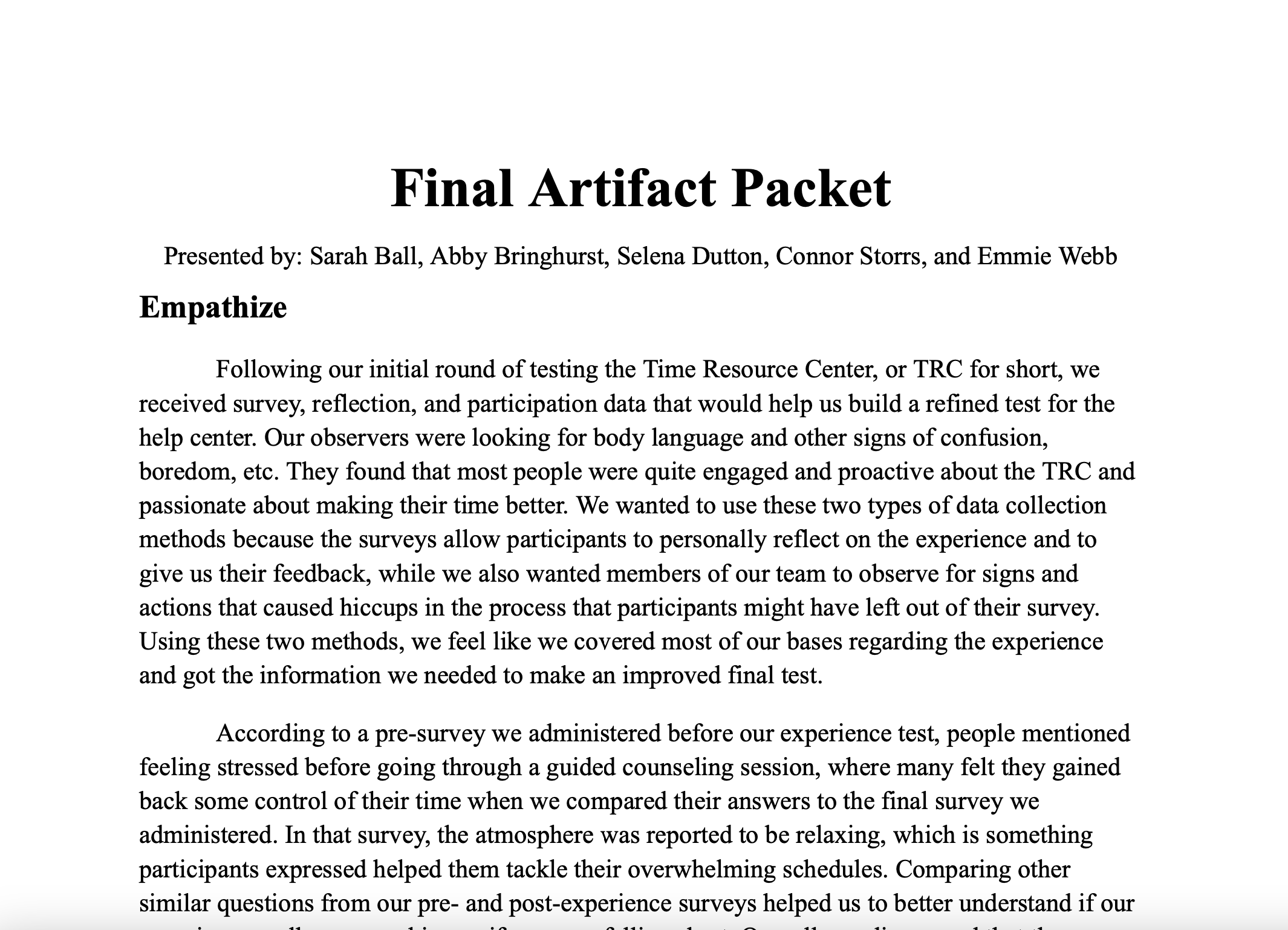
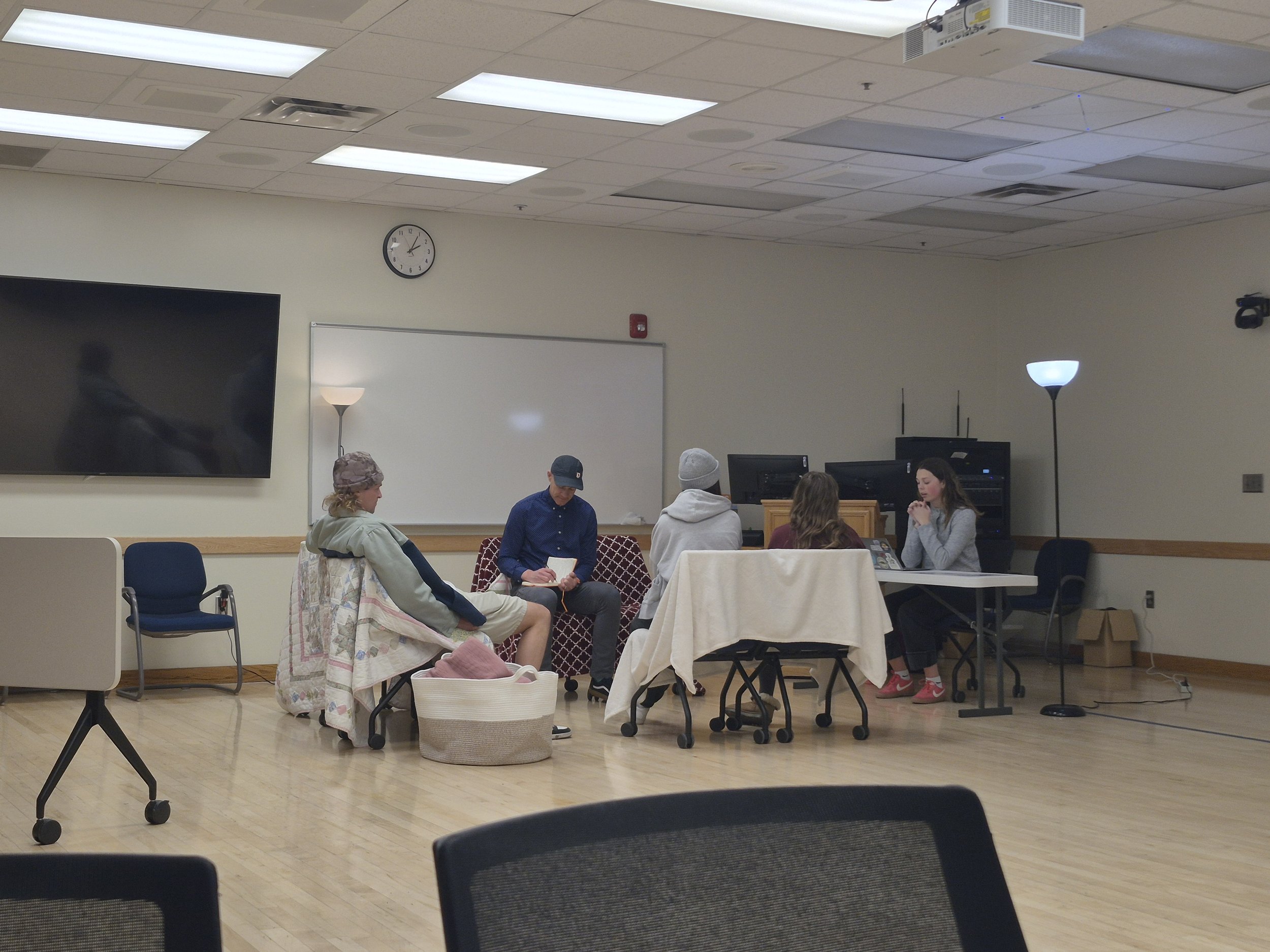
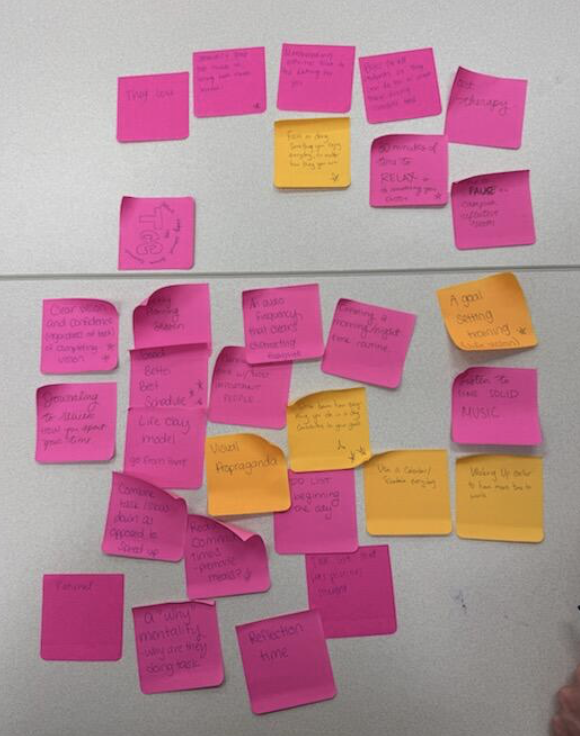
We began by conducting empathy research to understand the real challenges students faced around stress and time management. Through interviews, feedback, and observation, we learned that students weren’t struggling because they lacked time, but because they lacked a simple, intuitive way to prioritize it. This insight shaped our prototyping phase, where we tested a counseling session that introduced a new prioritization framework and gathered student reactions to refine the experience.
The Solution.
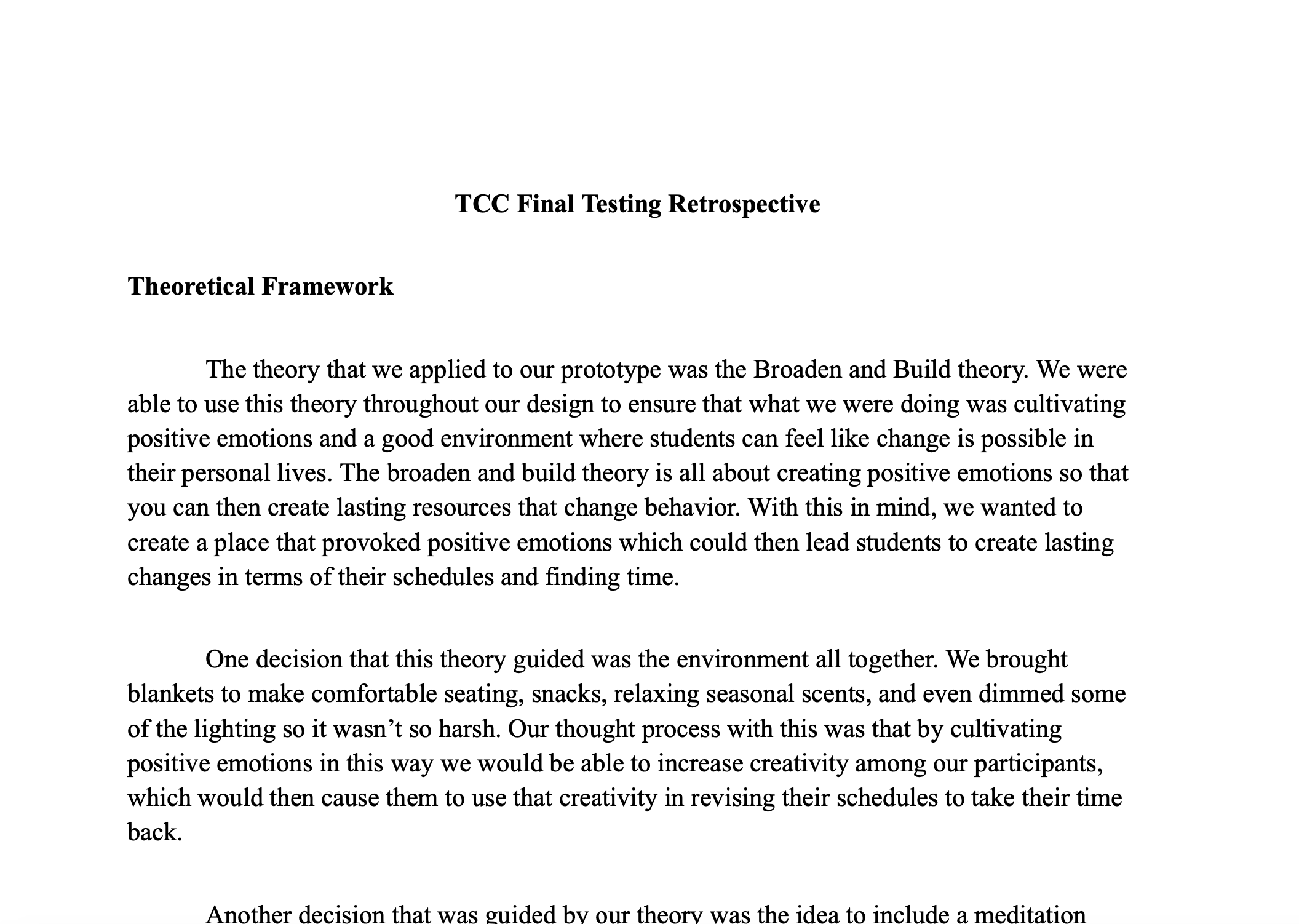
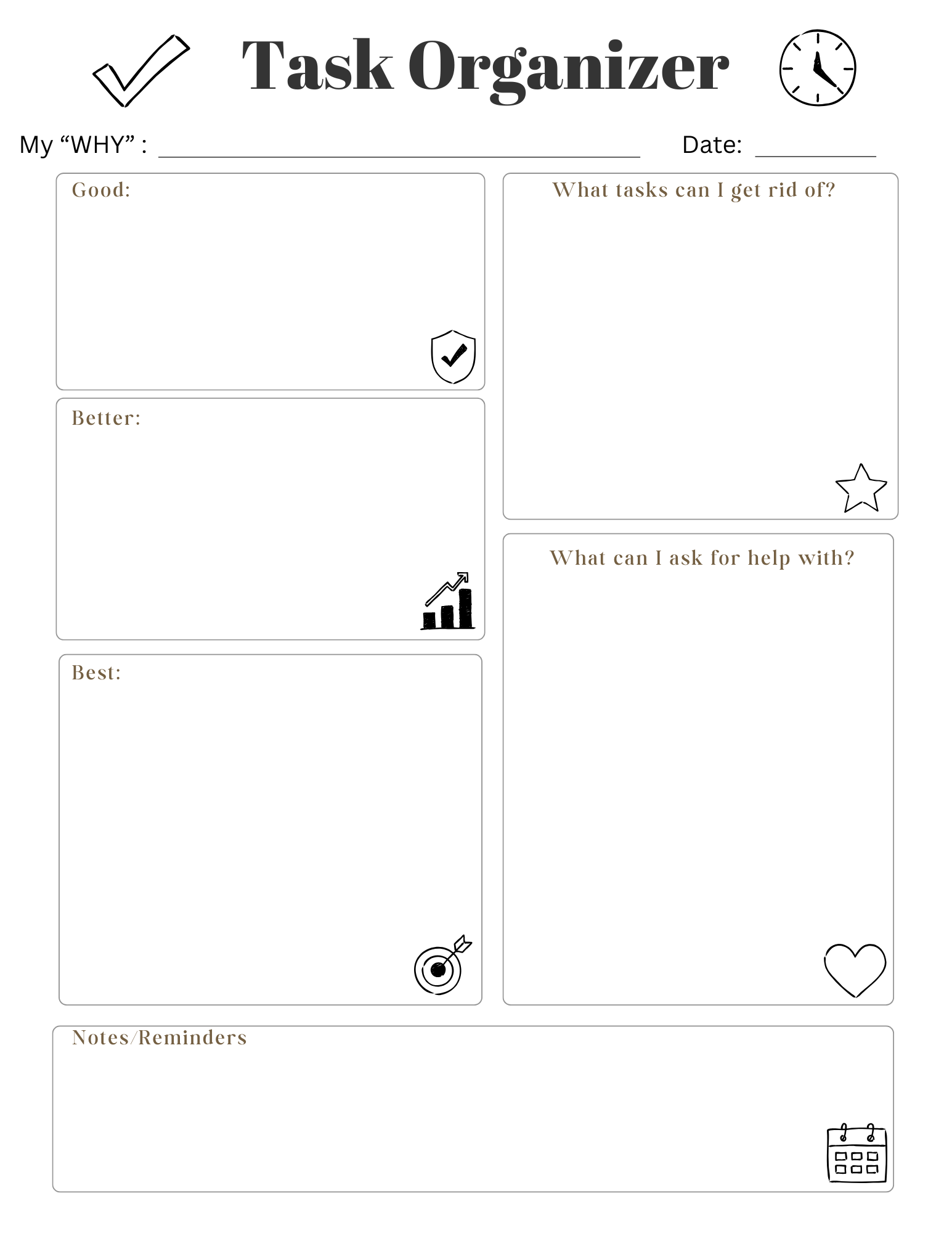
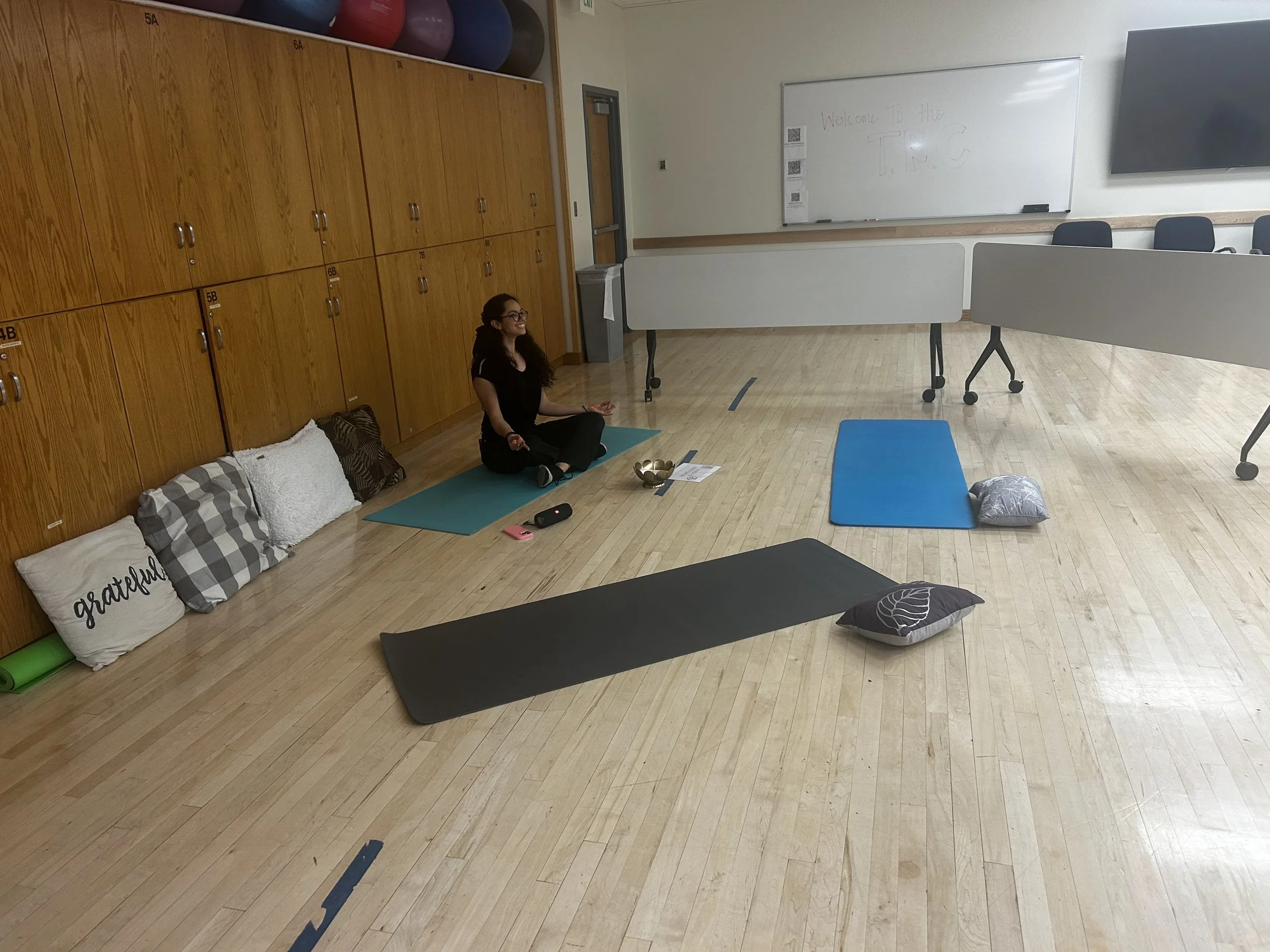
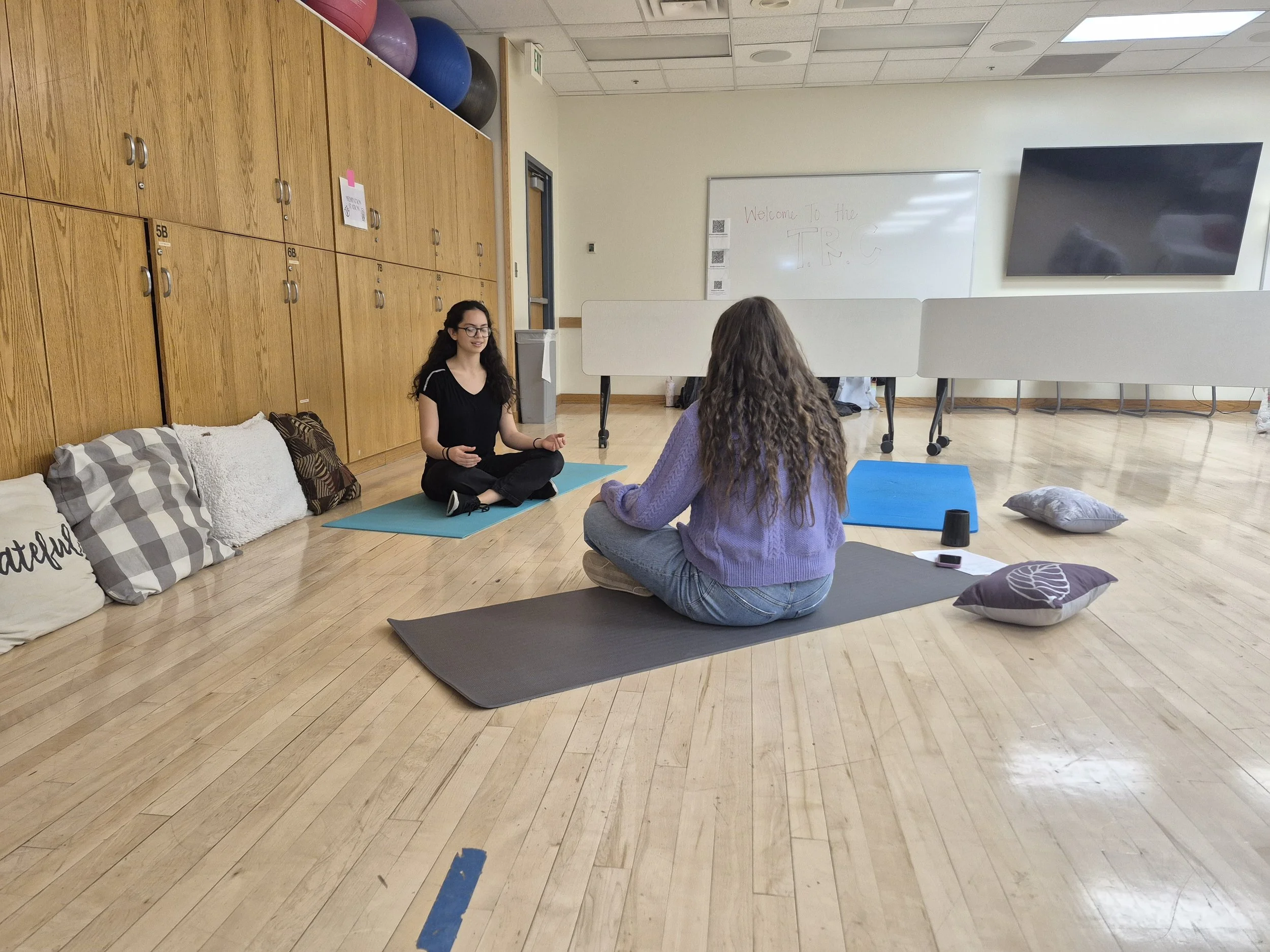
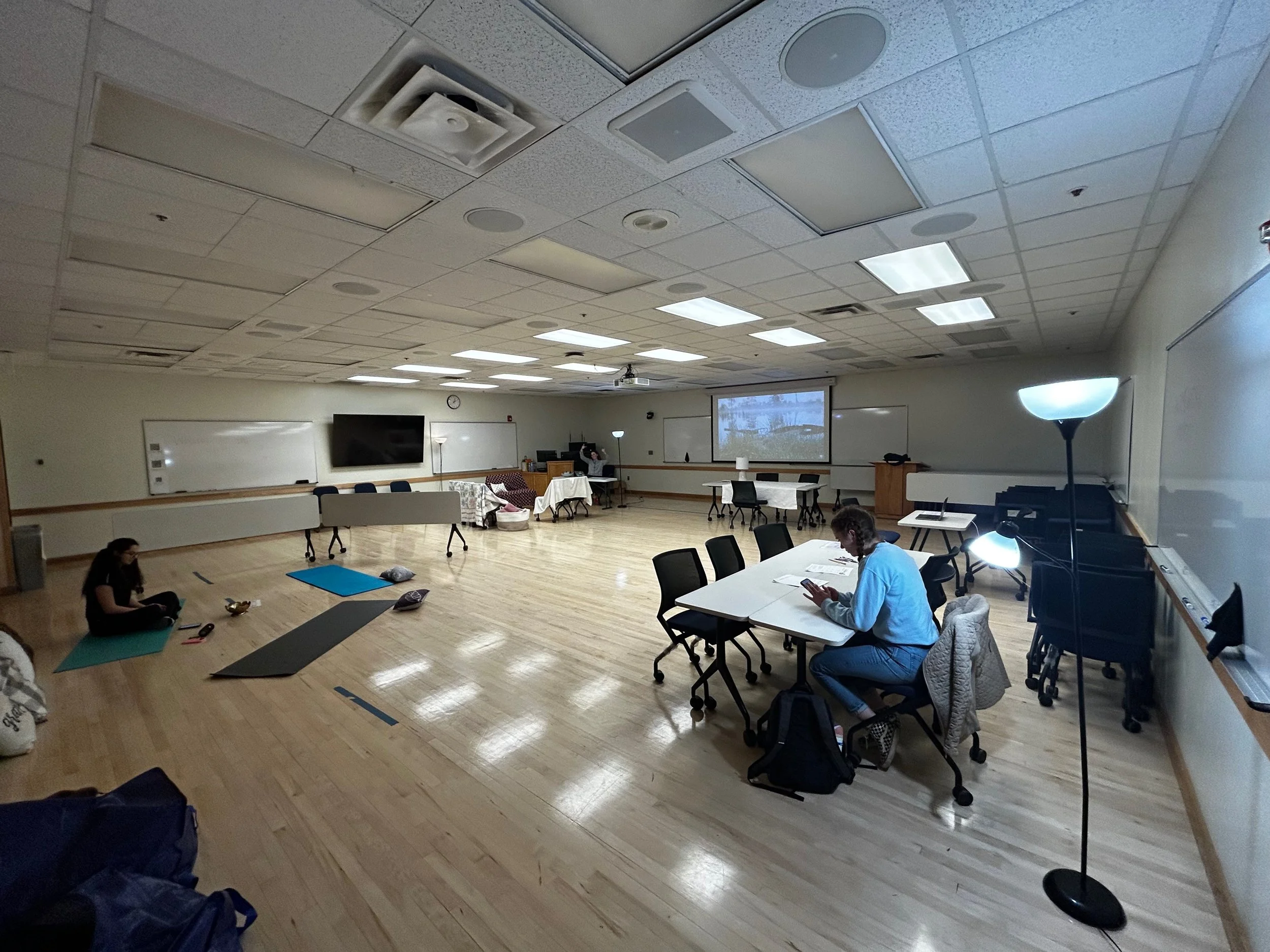
The initial solution began with a single counseling session focused on teaching the Good–Better–Best scheduling tool, giving students a simple way to prioritize their tasks. As we continued prototyping and gathering feedback, the idea grew into the full Time Resource Center: a quiet, calming, sensory-friendly space designed to help students slow down, reset, and reclaim their time. The center expanded into four stations, each offering a different type of support, from hands-on planning activities to restorative, low-stimulation environments where students could step away from stress. Together, these stations created a holistic experience that blended practical skill-building with emotional and mental relief, giving students both structure and space in a single, thoughtfully designed environment.
The Impact.
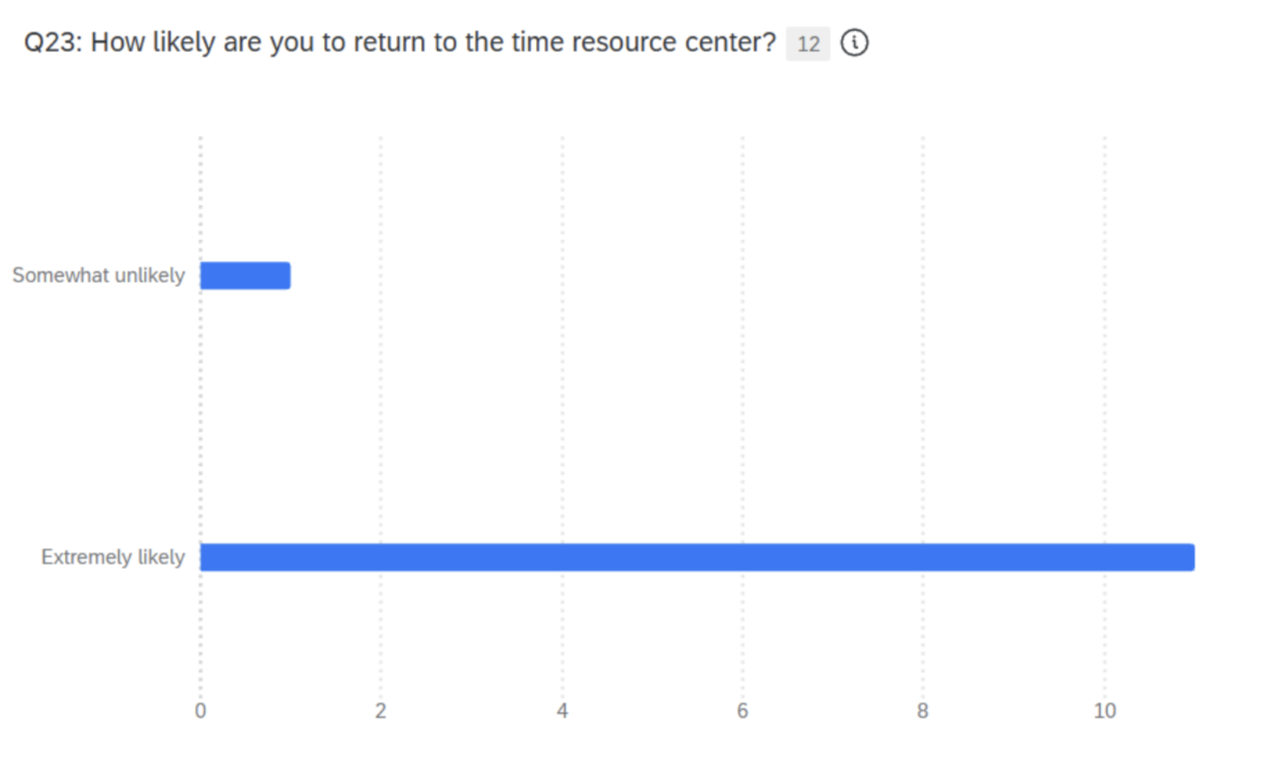
Although the Time Resource Center existed as a prototype rather than a fully implemented campus resource, the response from students was overwhelmingly positive. In user testing, 9 out of 10 students said they would attend the center if it were real, and 8 out of 10 said they would recommend it to a friend, highlighting both the relevance and appeal of the solution. The project demonstrated how designing from empathy and iterating with real user feedback can create experiences that genuinely resonate, even before they come to life.
My Role.
As the experience designer, facilitator, and researcher on this project, I guided the team through the full design-thinking process. I led empathy research to uncover the root challenges students faced, translated those insights into actionable concepts, and shaped the vision for what the Time Resource Center could become. I facilitated prototype testing sessions, gathered live user feedback, and helped refine each iteration so the experience aligned with real student needs. Throughout the project, I played an informal leadership role by coordinating our team’s efforts, ensuring our ideas stayed user-centered, and keeping momentum through each phase of development.
Skills and Tools Used.
This project strengthened my skills in user research, empathy gathering, and insight synthesis as I interviewed students and analyzed their pain points. I created and administered feedback surveys, built low-fidelity prototypes of both the counseling session and the multisensory stations, and used basic coding skills to develop a custom ChatGPT model that supported our concept. I also practiced experience storytelling, workshop facilitation, and iterative design. Altogether, this project helped me grow in strategic thinking, creative problem-solving, and collaborative leadership while applying tools from experience design, prototyping, and user testing.